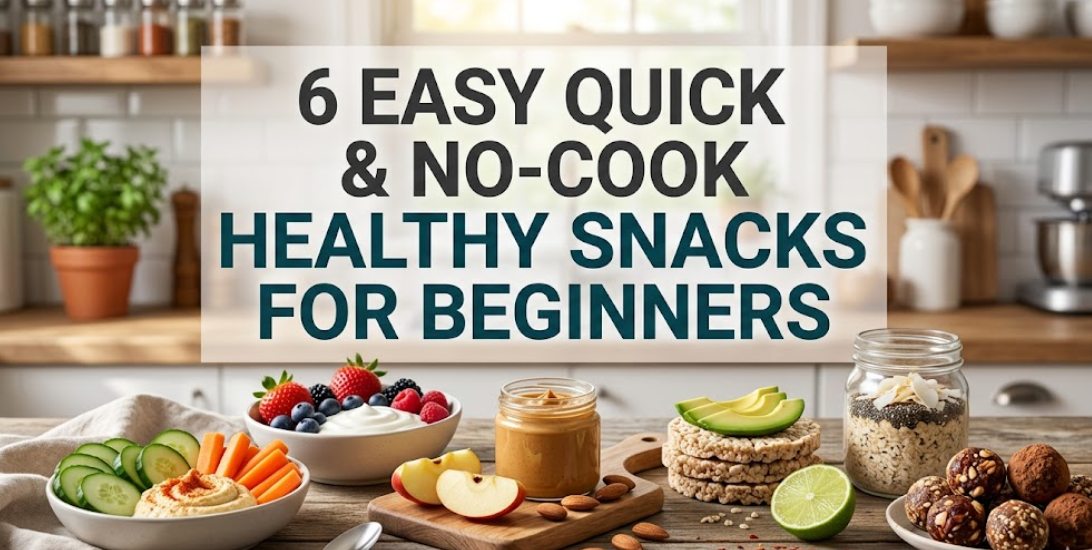
There’s a certain kind of resistance that shows up when you’re trying to eat better—especially at the beginning. It’s not always about motivation. More often, it’s about effort. The idea of chopping, cooking, cleaning, and planning can feel like too much, particularly when you’re already busy or tired.
That’s where no-cook snacks quietly change everything.
They remove friction. No heat, no recipes, no long prep. Just simple combinations of real food that come together in minutes—sometimes seconds. For beginners, that simplicity matters more than anything else. Because the easier something is, the more likely you are to actually do it.
These six snacks are the ones I keep returning to. They require almost no skill, no special equipment, and very little time. But despite that, they manage to be filling, balanced, and satisfying.
why no-cook snacks are perfect for beginners
When you’re starting out, consistency beats complexity every time. You don’t need elaborate meals—you need reliable habits.
No-cook snacks help because they:
- eliminate preparation barriers
- reduce time and decision fatigue
- rely on accessible ingredients
- make healthy eating feel manageable
Here’s a quick comparison that shows why they work so well:
| Snack Type | Prep Time | Skill Required | Consistency Level | Stress Level |
|---|---|---|---|---|
| Cooked recipes | 20–40 min | Moderate | Low | High |
| Packaged junk snacks | None | None | High | Low |
| No-cook healthy | 1–5 min | Very low | Very high | Very low |
The goal is not perfection. It’s momentum.
snack 1: greek yogurt with honey and seeds
This is one of the simplest ways to get a balanced snack without doing anything complicated.
All you need:
- 1 cup Greek yogurt
- 1 teaspoon honey
- 1 tablespoon seeds (chia, sunflower, or flax)
Stir and eat. That’s it.
Why it works:
- yogurt provides protein
- seeds add fiber and healthy fats
- honey balances the flavor
Nutrition overview:
| Component | Calories | Protein (g) | Benefit |
|---|---|---|---|
| Greek yogurt | 120 | 15 | High protein |
| Seeds | 60 | 2–3 | Fiber + omega fats |
| Honey | 20 | 0 | Natural sweetness |
| Total | 200 | 17–18 | Balanced snack |
This snack feels light but keeps you full longer than you’d expect.
snack 2: apple slices with peanut butter
This one is almost too easy—but that’s exactly why it works.
Steps:
- slice an apple
- add 1 tablespoon peanut butter
That’s the entire process.
Why beginners love it:
- no measuring required
- familiar taste
- minimal cleanup
Nutrition table:
| Component | Calories | Protein (g) | Notes |
|---|---|---|---|
| Apple | 95 | 0 | Fiber-rich |
| Peanut butter | 95 | 4 | Healthy fats |
| Total | 190 | 4 | Simple + satisfying |
If slicing feels like too much, even eating the apple whole with a spoon of peanut butter works.
snack 3: cottage cheese with fruit or salt
Cottage cheese is one of the most versatile no-cook foods. It works both sweet and savory.
Two easy versions:
- sweet: cottage cheese + pineapple or berries
- savory: cottage cheese + cucumber + pinch of salt
Why it’s ideal:
- high protein
- ready straight from the container
- adaptable
Nutrition snapshot:
| Component | Calories | Protein (g) | Benefit |
|---|---|---|---|
| Cottage cheese | 160 | 20 | Protein-rich |
| Add-ons | 30–60 | 1–2 | Flavor + variety |
| Total | 190–220 | 20–22 | Filling snack |
This is one of the most efficient snacks for staying full.
snack 4: whole grain crackers with cheese
No cooking, no preparation—just assemble.
Basic setup:
- a handful of whole grain crackers
- a few slices of cheese
Why it works:
- carbs + protein combo
- easy to portion
- widely available ingredients
Nutrition breakdown:
| Component | Calories | Protein (g) | Notes |
|---|---|---|---|
| Crackers | 70 | 2 | Energy source |
| Cheese | 110 | 7 | Protein + calcium |
| Total | 180 | 9 | Balanced snack |
You can also add a slice of tomato or cucumber for freshness.
snack 5: nuts and yogurt (no mixing required)
Sometimes even mixing ingredients feels like effort. This snack keeps things separate.
Just take:
- a handful of nuts
- a small bowl of yogurt
Eat them side by side.
Why it’s useful:
- zero preparation
- protein + healthy fats
- flexible portions
Nutrition estimate:
| Component | Calories | Protein (g) | Benefit |
|---|---|---|---|
| Yogurt | 120 | 10–15 | Protein |
| Nuts | 150 | 5 | Healthy fats |
| Total | 270 | 15–20 | Sustained energy |
This is perfect for when you don’t want to “make” anything at all.
snack 6: banana with milk or yogurt
This is one of the most beginner-friendly combinations.
Options:
- banana + glass of milk
- banana + spoonful of yogurt
Why it works:
- naturally sweet
- quick energy
- no prep beyond peeling
Nutrition example:
| Component | Calories | Protein (g) | Notes |
|---|---|---|---|
| Banana | 90 | 1 | Natural carbs |
| Milk | 100 | 8 | Protein + calcium |
| Total | 190 | 9 | Simple combo |
This snack is especially helpful when you need something quick before heading out.
how to build a no-cook snack routine
You don’t need to rely on willpower. A few small systems make everything easier.
| Strategy | Example | Result |
|---|---|---|
| keep basics stocked | yogurt, eggs, fruit, nuts | always have options |
| repeat simple meals | same 4–6 snacks weekly | less decision fatigue |
| combine food groups | protein + carbs/fat | better satisfaction |
| reduce prep steps | choose ready-to-eat items | consistency |
sample beginner snack schedule
This isn’t a rule—just a simple example of how snacks can fit into your day.
| Time | Snack | Purpose |
|---|---|---|
| Morning | Yogurt with seeds | Start with protein |
| Afternoon | Apple + peanut butter | Prevent cravings |
| Evening | Crackers + cheese | Light and filling |
common beginner mistakes (and how to avoid them)
trying to do too much
Start simple. Complexity can come later.
skipping snacks entirely
This often leads to overeating later.
relying only on carbs
Adding protein helps you stay full longer.
not keeping food available
If healthy options aren’t accessible, you’ll default to easier ones.
quick comparison chart of all six snacks
| Snack | Calories | Protein (g) | Prep Time | Effort Level |
|---|---|---|---|---|
| Yogurt + honey + seeds | 200 | 17–18 | 2 min | Very low |
| Apple + peanut butter | 190 | 4 | 2 min | Very low |
| Cottage cheese combo | 200 | 20–22 | 1 min | Very low |
| Crackers + cheese | 180 | 9 | 1 min | Very low |
| Nuts + yogurt | 270 | 15–20 | 1 min | Very low |
| Banana + milk | 190 | 9 | 1 min | Very low |
why these snacks actually work
They succeed because they remove barriers.
No cooking
No complicated steps
No special skills required
And yet, they still provide:
- protein
- fiber
- healthy fats
- steady energy
That combination is what makes them sustainable.
frequently asked questions
- do I need to cook to eat healthy
No, many healthy foods can be eaten as they are with simple combinations. - how much protein should a snack have
Around 5–15 grams is a good starting point for beginners. - are these snacks good for weight loss
Yes, they can help control hunger and reduce overeating. - what if I don’t like certain ingredients
You can swap foods easily—use what you enjoy. - how often should I snack
1–2 snacks per day works well for most people. - can I eat the same snacks every day
Yes, repetition can make healthy habits easier to maintain.
final thoughts
Healthy eating doesn’t have to start with big changes. In fact, it rarely does.
It starts with small, repeatable actions—like choosing a snack that takes one minute instead of none, but leaves you feeling noticeably better. Over time, those small decisions build momentum.
And when something is this easy, there’s really nothing standing in your way.