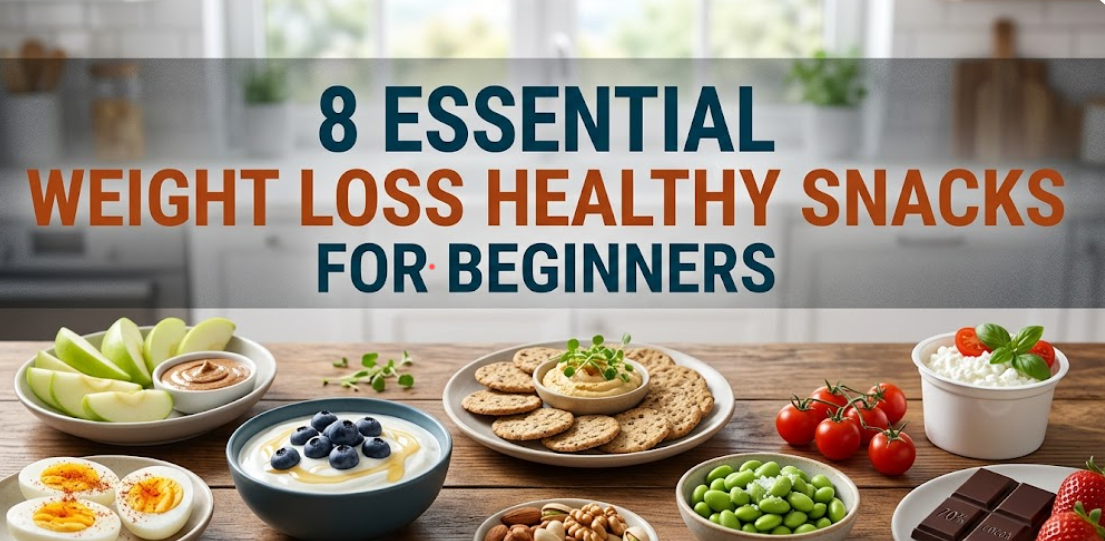
Starting a weight loss journey can feel overwhelming, especially when hunger strikes between meals and the temptation to grab something unhealthy kicks in. Snacks are often misunderstood—many people think they should be avoided entirely when trying to lose weight. In reality, the right snacks can stabilize blood sugar, prevent overeating, and keep energy levels steady throughout the day.
The key is not to eliminate snacks but to choose them wisely. For beginners, the best weight loss snacks are simple, portion-controlled, nutrient-dense, and satisfying. This article walks through eight essential snack ideas that are practical, affordable, and effective for building healthier eating habits.
Understanding what makes a snack “weight loss friendly”
Before diving into the snacks themselves, it helps to understand the foundation. A good weight loss snack usually includes one or more of the following:
- Protein: helps reduce hunger and supports muscle maintenance
- Fiber: improves digestion and keeps you full longer
- Healthy fats: provide satiety and stable energy
- Low added sugar: prevents energy crashes and fat storage spikes
Below is a quick comparison of snack qualities:
Snack Type Calories (avg) Protein Fiber Satiety Level Weight Loss Friendly
Chips 150–200 Low Low Low No
Chocolate bars 180–250 Low Low Medium No
Fruit + nuts 120–180 Medium Medium High Yes
Greek yogurt 100–150 High Low High Yes
Boiled eggs 70–140 High None High Yes
This table highlights a simple truth: calories matter, but the type of calories matters more.
- Greek yogurt with berries
This is one of the easiest and most effective snacks for beginners. Greek yogurt is high in protein, which helps control appetite, while berries add fiber and natural sweetness.
A small bowl of plain Greek yogurt with strawberries or blueberries can keep you full for hours without adding excessive calories. The combination of protein and antioxidants makes it both filling and nutritionally rich.
Why it works:
- Protein reduces hunger hormones
- Berries provide fiber and vitamins
- Low calorie yet highly satisfying
Sample portion breakdown:
Ingredient Quantity Calories Protein Fiber
Greek yogurt 150g 100 10g 0g
Blueberries 50g 30 0g 2g
Total 130 10g 2g
If you’re just starting out, avoid flavored yogurts as they often contain added sugar.
- Apple slices with peanut butter
This snack balances carbohydrates, fiber, and healthy fats. Apples are naturally sweet and rich in fiber, while peanut butter adds richness and satiety.
The trick here is portion control. Peanut butter is calorie-dense, so sticking to one tablespoon is enough.
Why it works:
- Combines fast and slow energy sources
- Keeps cravings in check
- Easy to prepare and carry
Nutritional snapshot:
Ingredient Quantity Calories Protein Fiber
Apple 1 medium 95 0g 4g
Peanut butter 1 tbsp 90 4g 1g
Total 185 4g 5g
This snack is especially useful in the afternoon when energy dips.
- Boiled eggs with a pinch of salt and pepper
Eggs are one of the most nutrient-dense foods available. They are high in protein and healthy fats, making them perfect for weight loss.
Boiled eggs are convenient and can be prepared in advance, making them ideal for beginners who want something quick.
Why it works:
- High satiety index
- Supports muscle maintenance
- Very low in carbohydrates
Nutrition chart:
Serving Calories Protein Fat Carbs
1 boiled egg 70 6g 5g 0.5g
2 boiled eggs 140 12g 10g 1g
Pairing eggs with a few cucumber slices can add crunch and hydration.
- Cottage cheese with cucumber or tomatoes
Cottage cheese is another protein-rich snack that often goes overlooked. It’s light, creamy, and pairs well with fresh vegetables.
Adding cucumber or tomatoes increases volume without significantly increasing calories.
Why it works:
- High protein content
- Low calorie density
- Refreshing and hydrating
Nutritional example:
Ingredient Quantity Calories Protein Fiber
Cottage cheese 100g 98 11g 0g
Cucumber 50g 8 0g 0.5g
Total 106 11g 0.5g
This is a great option for evening snacking.
- Roasted chickpeas
For those who crave something crunchy, roasted chickpeas are a healthier alternative to chips. They are rich in plant-based protein and fiber.
You can season them with spices like paprika, cumin, or black pepper for added flavor without extra calories.
Why it works:
- High fiber improves fullness
- Crunchy texture satisfies snack cravings
- Plant-based protein source
Nutrition overview:
Serving Calories Protein Fiber
½ cup roasted 120 6g 5g
This snack is also budget-friendly and easy to prepare in batches.
- Mixed nuts (controlled portion)
Nuts are nutrient-dense and packed with healthy fats, protein, and fiber. However, they are calorie-dense, so portion control is essential.
A small handful (about 20–25 grams) is enough to provide benefits without excess calories.
Why it works:
- Healthy fats reduce hunger
- Long-lasting energy
- Supports heart health
Comparison chart:
Nut Type Calories (25g) Protein Fiber
Almonds 145 5g 3g
Walnuts 163 4g 2g
Cashews 137 4g 1g
For beginners, pre-portioning nuts into small containers can prevent overeating.
- Vegetable sticks with hummus
This snack combines fiber-rich vegetables with protein and healthy fats from hummus. It’s colorful, satisfying, and low in calories.
Common vegetables include carrots, cucumbers, and bell peppers.
Why it works:
- High volume, low calories
- Rich in fiber and micronutrients
- Keeps you feeling full
Nutrition table:
Ingredient Quantity Calories Protein Fiber
Carrot sticks 100g 41 1g 3g
Hummus 2 tbsp 70 2g 2g
Total 111 3g 5g
This is a great snack for those who enjoy dipping and variety.
- Dark chocolate with almonds
Weight loss doesn’t mean giving up all treats. A small portion of dark chocolate paired with almonds can satisfy sweet cravings without derailing progress.
Choose dark chocolate with at least 70% cocoa.
Why it works:
- Reduces cravings for sweets
- Provides antioxidants
- Balanced with healthy fats
Nutrition example:
Ingredient Quantity Calories Protein Fiber
Dark chocolate 20g 120 2g 3g
Almonds 10g 60 2g 1g
Total 180 4g 4g
Moderation is key here, but it can be a powerful tool for long-term adherence.
How to build your own snack strategy
Having good snack options is only part of the equation. How and when you snack also matters.
Here are a few practical guidelines:
- Eat when genuinely hungry, not out of boredom
- Keep snacks under 150–200 calories
- Combine protein with fiber whenever possible
- Prepare snacks in advance to avoid impulsive choices
Daily snack timing example:
Time Snack Idea
11:00 AM Greek yogurt + berries
3:30 PM Apple + peanut butter
8:00 PM Cottage cheese + cucumber
This structure prevents overeating during main meals.
Common beginner mistakes to avoid
Even with healthy snacks, certain habits can slow progress.
Overeating “healthy” foods
Foods like nuts and peanut butter are healthy but calorie-dense. Eating too much can easily exceed your daily calorie needs.
Skipping snacks entirely
This often leads to extreme hunger and overeating later.
Choosing low-fat but high-sugar options
Many “diet” snacks are loaded with sugar, which can spike insulin and increase cravings.
Not reading labels
Hidden sugars and portion sizes can be misleading.
Visual comparison chart:
Mistake Outcome
Skipping snacks Overeating later
Too many nuts Excess calories
Sugary “diet” foods Increased cravings
Large portions Slower weight loss
Why consistency matters more than perfection
Beginners often aim for perfection and give up when they slip. The truth is, consistency is far more important.
If you choose healthy snacks 80% of the time, you will still see progress. Occasional indulgence is normal and even helpful for long-term sustainability.
Think of snacks as tools, not restrictions.
Long-term benefits of healthy snacking
Beyond weight loss, these habits offer broader health benefits:
- Improved metabolism
- Better energy levels
- Reduced risk of overeating
- Balanced blood sugar levels
Over time, your body adapts, cravings reduce, and healthier choices become natural rather than forced.
FAQs
- Can I snack every day and still lose weight?
Yes, as long as your snacks are portion-controlled and fit within your daily calorie needs. Healthy snacks can actually support weight loss by preventing overeating. - What is the best time to eat snacks?
There is no fixed “best” time. The ideal time is when you feel hungry between meals. Common times include mid-morning and mid-afternoon. - Are fruits alone good snacks for weight loss?
Fruits are healthy, but pairing them with protein or fat (like nuts or yogurt) improves satiety and keeps you full longer. - How many snacks should I eat per day?
Most people benefit from 1–2 snacks per day. It depends on your hunger levels and activity. - Can I eat snacks at night while trying to lose weight?
Yes, but choose light, protein-rich options like cottage cheese or yogurt. Avoid high-sugar or high-fat snacks late at night. - What should I do if I feel hungry all the time?
Focus on increasing protein and fiber in your meals and snacks. Persistent hunger may indicate that your meals are not balanced.
Closing thought
Weight loss doesn’t require extreme diets or eliminating snacks entirely. In fact, the right snacks can make your journey easier, more enjoyable, and more sustainable. By choosing simple, nutrient-dense options and paying attention to portions, beginners can build habits that lead to lasting results.