There’s a quiet myth around healthy eating that refuses to go away—the idea that it has to be expensive, complicated, or time-consuming. Walk into any supermarket or scroll through social media, and you’ll see premium “health” products priced far above everyday staples. It creates the impression that eating well is something reserved for people with extra time and money.
In reality, some of the most effective, satisfying, and genuinely healthy snacks are built from the simplest ingredients. They don’t come in flashy packaging, and they don’t need a long prep routine. They just work—day after day, without draining your wallet.
This guide is about those snacks. The ones that are practical, affordable, and easy to stick with. Not for a week, but for months and years.
why budget snacks matter more than you think
When people try to improve their eating habits, they often focus on main meals. But snacks are where consistency is either built or broken. A poorly chosen snack can undo a balanced meal, while a smart one can stabilize energy, reduce cravings, and even improve productivity.
Budget-friendly snacks add another layer of sustainability. If something is affordable, you’re far more likely to keep buying it, preparing it, and actually eating it.
Here’s a simple breakdown of why budget snacks matter:
| Factor | Expensive Snacks | Budget Snacks |
|---|---|---|
| Consistency | Hard to maintain | Easy to sustain |
| Accessibility | Limited | Widely available |
| Preparation | Often processed | Often simple/whole |
| Long-term success | Low | High |
what makes a snack actually “work”
Not every cheap snack is healthy, and not every healthy snack is practical. The ones that truly work tend to follow a few simple rules:
- They are quick to prepare or ready to eat
- They contain a balance of protein, fiber, or healthy fats
- They are filling enough to prevent overeating later
- They rely on affordable, widely available ingredients
Think of it less like dieting and more like building a reliable system.
- peanut butter on toast
It’s hard to beat this combination when it comes to cost, simplicity, and effectiveness.
A slice of whole grain bread paired with a tablespoon of peanut butter gives you a mix of carbohydrates, protein, and healthy fats. It’s filling without being heavy and takes less than two minutes to prepare.
Why it works:
- Extremely affordable ingredients
- Long shelf life
- Satisfies both hunger and cravings
Quick nutrition table:
| Component | Value |
|---|---|
| Protein | 8–10g |
| Calories | 180–220 |
| Prep time | 2 minutes |
Budget tip: Buy peanut butter in larger jars—they’re significantly cheaper per serving.
- boiled eggs
Boiled eggs are one of the most cost-efficient protein sources available.
They require minimal preparation (just boil a batch once or twice a week) and can be eaten anywhere—no utensils needed.
Why they stand out:
- High satiety
- Compact and portable
- Low cost per serving
| Metric | Value |
|---|---|
| Protein (2 eggs) | 12–14g |
| Calories | ~140 |
| Cost per serving | Very low |
Simple prep chart:
| Step | Time |
|---|---|
| Boiling | 8–10 min |
| Cooling | 5 min |
| Storage | Up to 4 days |
- yogurt with oats
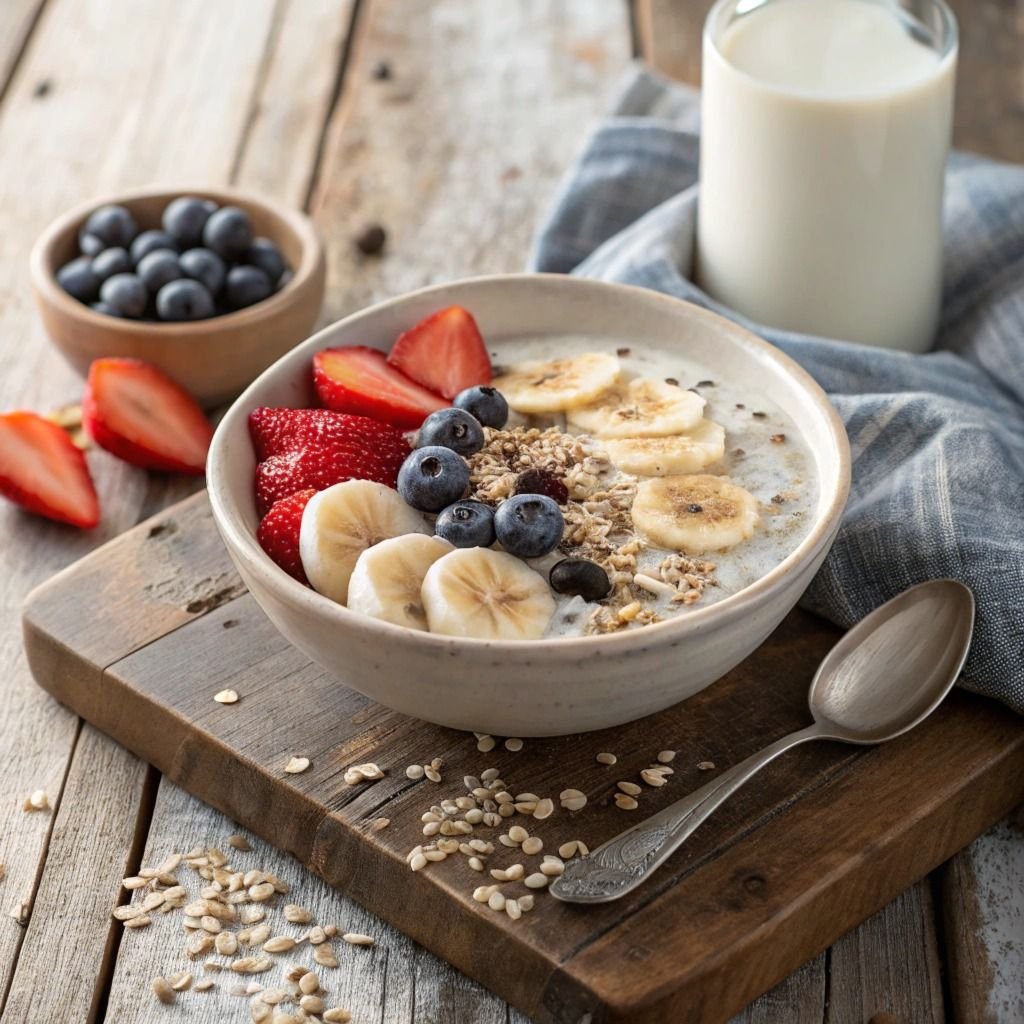
This is one of those snacks that feels more like a small meal.
Plain yogurt mixed with a spoonful of oats creates a creamy, slightly chewy texture that’s surprisingly satisfying. Add a bit of fruit if you want extra flavor.
Why it works:
- Balanced macronutrients
- Very affordable ingredients
- Keeps you full for hours
| Nutrient | Amount |
|---|---|
| Protein | 12–15g |
| Fiber | 4–6g |
| Calories | 180–250 |
Variation ideas:
| Add-on | Benefit |
|---|---|
| Banana | Natural sweetness |
| Honey | Quick energy boost |
| Cinnamon | Flavor without sugar |
- roasted chickpeas
If you’re someone who craves crunchy snacks, roasted chickpeas are a game changer.
They’re cheap, easy to prepare, and far more nutritious than chips. Plus, you can season them however you like—spicy, salty, or even slightly sweet.
Why they work:
- High in fiber and plant protein
- Long shelf life once roasted
- Very customizable
| Nutrient | Amount (1 cup) |
|---|---|
| Protein | 14g |
| Fiber | 12g |
| Calories | 250–270 |
Cost comparison:
| Snack Type | Cost per serving |
|---|---|
| Potato chips | Medium |
| Chickpeas | Low |
- apple slices with peanuts
Sometimes the simplest combinations are the most effective.
Apples provide natural sweetness and fiber, while peanuts add protein and healthy fats. Together, they create a balanced snack that keeps hunger in check.
Why it works:
- No cooking required
- Easy to pack and carry
- Budget-friendly year-round
| Component | Value |
|---|---|
| Protein | 7–9g |
| Calories | 180–220 |
| Prep time | 3 minutes |
- homemade popcorn
Popcorn often gets overlooked as a healthy snack, but when prepared properly (without excessive butter or sugar), it’s actually a great low-cost option.
It’s high in fiber and can be made in large batches.
Why it works:
- Extremely cheap per serving
- High volume (keeps you full)
- Easy to customize
| Metric | Value |
|---|---|
| Calories | ~100 (plain) |
| Fiber | 3–4g |
| Cost | Very low |
Preparation comparison:
| Method | Health Factor | Cost |
|---|---|---|
| Microwave bag | Medium | Medium |
| Air-popped | High | Low |
- lentil snack bowl
Lentils are one of the most underrated budget foods. They’re packed with protein, fiber, and nutrients, and they cost very little.
A simple lentil snack bowl can be made with:
- Cooked lentils
- Chopped onions
- Tomatoes
- Lemon juice
- Salt and spices
Why it works:
- High nutritional value
- Very filling
- Extremely low cost
| Nutrient | Amount |
|---|---|
| Protein | 16–18g |
| Fiber | 14–15g |
| Calories | ~230 |
weekly budget snack plan
Consistency becomes easier when you have a simple plan. Here’s a weekly rotation you can follow:
| Day | Snack Option |
|---|---|
| Monday | Peanut butter toast |
| Tuesday | Boiled eggs |
| Wednesday | Yogurt + oats |
| Thursday | Roasted chickpeas |
| Friday | Apple + peanuts |
| Saturday | Popcorn |
| Sunday | Lentil bowl |
budget breakdown chart
Here’s an approximate weekly cost comparison:
| Snack Type | Weekly Cost (Estimate) |
|---|---|
| Packaged snacks | High |
| Homemade snacks | Low |
Monthly impact:
| Category | Cost |
|---|---|
| Processed snacks | $$$ |
| Budget snacks | $ |
Even small savings per day can add up significantly over time.
how to make these snacks part of your routine
The biggest challenge isn’t knowing what to eat—it’s actually doing it consistently.
A few practical strategies:
Prepare in batches
Boil eggs, cook lentils, or roast chickpeas in advance.
Keep snacks visible
If healthy options are easy to reach, you’re more likely to choose them.
Limit unhealthy alternatives
If junk food isn’t nearby, you naturally eat better.
common mistakes people make
Trying too many changes at once
Start with one or two snacks, not all seven.
Ignoring taste
If you don’t enjoy it, you won’t stick with it.
Overcomplicating things
Simple snacks are easier to maintain.
long-term benefits of simple snacking
When you stick to budget-friendly, healthy snacks, the results aren’t dramatic—but they are consistent.
Over time, you may notice:
- More stable energy levels
- Reduced cravings
- Better digestion
- Less spending on unnecessary foods
These small improvements build a foundation for long-term health.
faqs
- are cheap snacks really healthy?
Yes, many affordable foods like eggs, lentils, and oats are highly nutritious and often healthier than expensive processed options. - how do I avoid getting bored with the same snacks?
Rotate ingredients, add spices, or combine foods differently to create variety. - can I prepare these snacks in advance?
Absolutely. Many of them—like boiled eggs, lentils, and roasted chickpeas—are ideal for batch preparation. - are these snacks suitable for weight loss?
They can support weight loss by keeping you full and reducing overeating, but overall calorie balance still matters. - what if I don’t have time to prepare snacks?
Choose the simplest options like fruit, peanuts, or yogurt. Even minimal effort can make a difference. - how much should I spend on snacks weekly?
It depends on your budget, but switching to homemade snacks can reduce costs by 30–60% compared to packaged foods.
final thoughts
Healthy eating doesn’t need to be complicated, and it certainly doesn’t need to be expensive. The idea that you have to choose between your budget and your health is simply not true.
The snacks in this list are proof of that. They’re simple, affordable, and effective—not because they’re trendy, but because they fit into real life.
Start small. Pick one or two options, make them part of your routine, and build from there.
In the end, it’s not about finding perfect snacks. It’s about finding the ones that you’ll actually keep eating—and that quietly make your days a little better.