There’s a certain moment in the day—usually somewhere between meals—when hunger shows up uninvited. It doesn’t ask whether you’ve planned ahead. It doesn’t care if your kitchen is stocked or if you have time to cook. It just appears, and in that moment, the easiest option usually wins.
For many people, that “easy option” turns into packaged snacks, sugary treats, or whatever happens to be within reach. Not because those are the best choices, but because they require zero effort.
That’s where no-cook snacks come in. They remove friction entirely. No stove, no oven, no complicated prep—just simple combinations of ingredients that are ready in minutes. When you pair that simplicity with a budget-friendly approach, you get something powerful: snacks that are realistic to maintain every day.
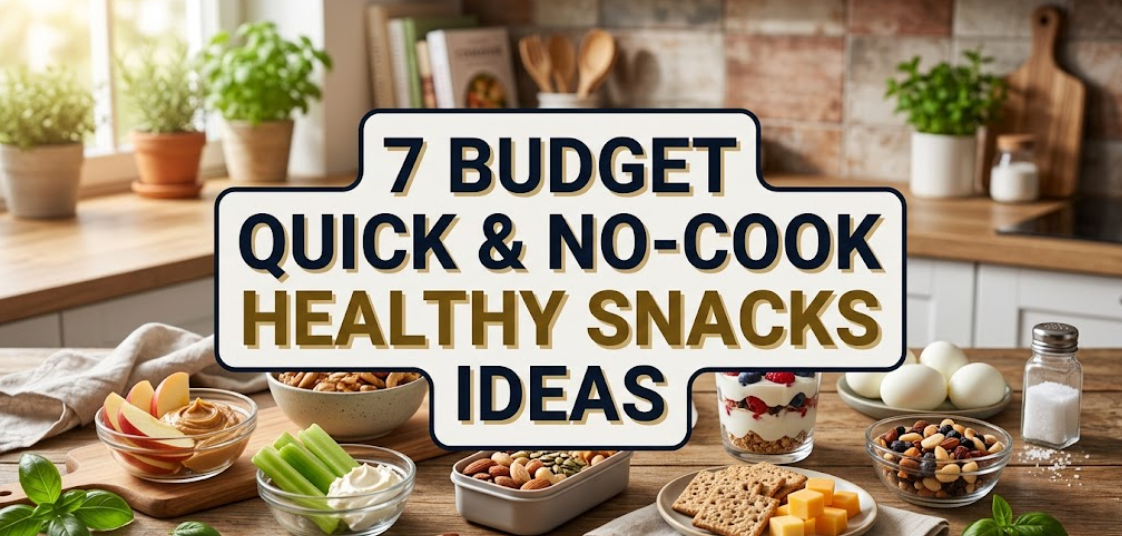
This article focuses on seven such snack ideas. They’re quick, affordable, and require no cooking at all—yet they still provide real nutritional value.
why no-cook snacks are more effective than you think
It’s easy to underestimate how much preparation affects our food choices. Even the healthiest recipe becomes irrelevant if it feels inconvenient in the moment.
No-cook snacks solve that problem by eliminating the barrier entirely.
Here’s a simple comparison:
| Factor | Cooked Snacks | No-Cook Snacks |
|---|---|---|
| Time required | 10–30 minutes | 1–5 minutes |
| Effort level | Moderate | Minimal |
| Consistency | Hard to maintain | Easy to sustain |
| Accessibility | Limited | Always available |
When something is easy, it becomes repeatable. And repeatable habits are what actually create long-term change.
what makes a no-cook snack “work”
Not every quick snack is a good one. The most effective options usually include at least one of the following:
- Protein (for fullness)
- Fiber (for digestion and satiety)
- Healthy fats (for sustained energy)
At the same time, they should:
- Use affordable ingredients
- Be easy to assemble
- Taste good enough to repeat regularly
Think of it as building small combinations rather than following strict recipes.
- peanut butter banana wraps
This snack is as simple as it sounds, yet surprisingly satisfying.
Take a whole wheat flatbread or roti, spread a thin layer of peanut butter, place a banana in the center, and roll it up. Slice it into small pieces if you prefer.
Why it works:
- Naturally sweet and filling
- No utensils required after prep
- Extremely budget-friendly
Quick nutrition overview:
| Component | Value |
|---|---|
| Protein | 8–10g |
| Calories | 200–250 |
| Prep time | 3 minutes |
- yogurt with honey and seeds
A bowl of plain yogurt becomes much more interesting with just a few additions.
Add a drizzle of honey and a sprinkle of seeds like chia or sunflower. The result is creamy, slightly sweet, and textured.
Why it works:
- Balanced nutrients
- Quick to assemble
- Easily adjustable to taste
| Nutrient | Amount |
|---|---|
| Protein | 10–15g |
| Healthy fats | Moderate |
| Calories | 180–220 |
- apple slices with peanut butter
This combination shows up again and again for a reason—it simply works.
Slice an apple and pair it with a spoonful of peanut butter for dipping. The contrast between crisp and creamy makes it satisfying.
Why it works:
- Sweet and savory balance
- No cooking or complex prep
- Affordable year-round
| Metric | Value |
|---|---|
| Fiber | 4–5g |
| Protein | 6–8g |
| Calories | 180–220 |
- cottage cheese with fruit
Cottage cheese is one of the easiest ways to add protein without cooking.
Pair it with fruits like pineapple, apples, or even raisins for a mix of textures and flavors.
Why it works:
- High protein content
- Mild flavor kids and adults enjoy
- Requires no preparation beyond mixing
| Nutrient | Amount |
|---|---|
| Protein | 20–24g |
| Calories | ~200 |
| Prep time | 2 minutes |
- mixed nuts and dried fruit
When you need something portable, this combination is hard to beat.
A handful of nuts paired with a small portion of dried fruit creates a balanced snack that provides energy and nutrients.
Why it works:
- Long shelf life
- No refrigeration needed
- Easy to portion and carry
| Component | Value |
|---|---|
| Protein | 5–7g |
| Healthy fats | High |
| Calories | 180–220 |
- hummus with raw vegetables
Hummus is a ready-to-eat spread that pairs well with raw vegetables like carrots, cucumbers, or bell peppers.
Simply slice the vegetables and dip.
Why it works:
- High in fiber and plant protein
- Adds variety to your snack routine
- Encourages vegetable intake
| Nutrient | Amount |
|---|---|
| Protein | 6–8g |
| Fiber | 5–6g |
| Calories | ~150 |
- whole grain bread with avocado
Avocado toast doesn’t have to be expensive or trendy—it can be a simple, budget-friendly snack.
Mash a small amount of avocado onto whole grain bread, add a pinch of salt, and it’s ready.
Why it works:
- Healthy fats for sustained energy
- Very quick to prepare
- Filling despite small portions
| Metric | Value |
|---|---|
| Healthy fats | High |
| Fiber | 5–6g |
| Calories | 200–250 |
quick assembly time chart
One of the biggest advantages of these snacks is how little time they require.
| Snack Option | Prep Time |
|---|---|
| Peanut butter banana wrap | 3 min |
| Yogurt with seeds | 2 min |
| Apple + peanut butter | 3 min |
| Cottage cheese + fruit | 2 min |
| Nuts + dried fruit | 1 min |
| Hummus + vegetables | 4 min |
| Avocado toast | 3 min |
budget comparison breakdown
Cost is often the biggest concern when trying to eat healthier. Here’s how these snacks compare:
| Snack Type | Cost per Serving | Monthly Cost |
|---|---|---|
| Packaged snacks | Medium–High | High |
| No-cook homemade snacks | Low | Low |
Estimated savings:
| Scenario | Savings |
|---|---|
| Switching to no-cook snacks | 30–50% |
building a simple no-cook snack routine
Consistency matters more than variety at the beginning.
Start with:
- 2–3 snacks you genuinely enjoy
- Ingredients you can buy weekly
- Minimal prep requirements
Once those become routine, you can expand.
Example rotation:
| Day | Snack Option |
|---|---|
| Monday | Yogurt + seeds |
| Tuesday | Apple + peanut butter |
| Wednesday | Nuts + dried fruit |
| Thursday | Hummus + vegetables |
| Friday | Cottage cheese + fruit |
| Saturday | Banana wrap |
| Sunday | Avocado toast |
common mistakes to avoid
Even simple snacks can become ineffective if certain habits creep in.
Overeating healthy foods
Just because something is healthy doesn’t mean unlimited portions.
Skipping protein
Snacks without protein may leave you hungry soon after.
Relying only on one option
Variety helps maintain interest and nutritional balance.
long-term benefits of no-cook snacking
The real advantage of no-cook snacks isn’t just convenience—it’s consistency.
Over time, these small choices can lead to:
- More stable energy levels
- Reduced reliance on processed foods
- Better portion control
- Lower food expenses
And perhaps most importantly, less stress around food decisions.
faqs
- are no-cook snacks actually healthy?
Yes, as long as they include whole ingredients like fruits, nuts, dairy, or legumes, they can be very nutritious. - can I rely only on these snacks daily?
They’re great for between meals, but you should still maintain balanced main meals for overall nutrition. - what if I don’t like certain ingredients?
You can easily swap items—for example, replace peanut butter with yogurt or nuts. - do these snacks help with weight management?
They can help control hunger and reduce overeating, which supports weight management. - how do I keep these snacks fresh?
Store ingredients properly and prepare only what you need for the day or two. - are these snacks suitable for kids?
Most of them are, especially options like yogurt, fruit, and peanut butter combinations.
final thoughts
Healthy eating doesn’t need to involve complicated recipes or long hours in the kitchen. In fact, the more effort something requires, the less likely it is to become part of your daily routine.
No-cook snacks remove that barrier completely. They fit into busy schedules, tight budgets, and real-life situations where convenience matters.
Start simple. Keep a few ingredients on hand. Build combinations that you enjoy.
Because in the end, the best snack isn’t the one that looks perfect—it’s the one you’ll actually eat, day after day, without thinking twice.